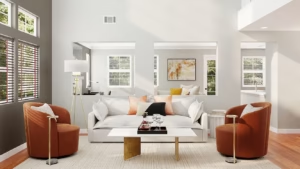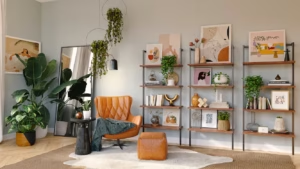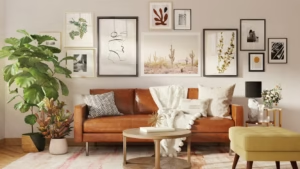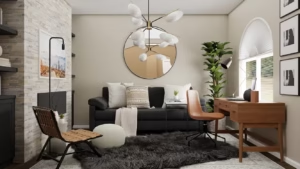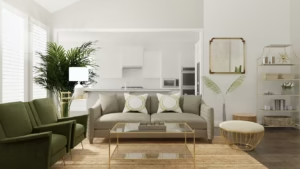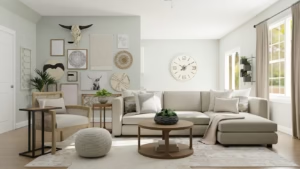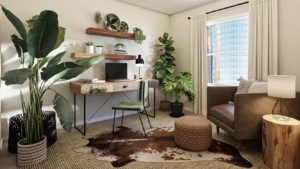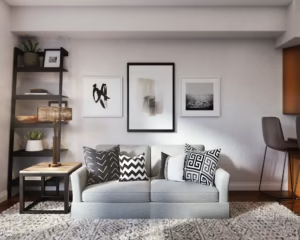
Designing a home is less about following every decorating trend and more about creating spaces that work well for the people who use them. Pushyourdesign can be approached as a simple design philosophy: push your design ideas further by combining practical planning with personal style.
A successful room should look considered, but it should also be comfortable, functional, and easy to live in. The right layout, lighting, materials, furniture, and decorative details can make a noticeable difference without requiring a complete renovation.
This guide explores practical ways to improve home interiors, from choosing a cohesive style to arranging furniture and adding finishing touches that give a room character.
Start With How the Room Will Be Used
Before choosing paint colors or decorative accessories, decide what the room needs to accomplish.
A living room might need to support conversation, television viewing, reading, entertaining, or several activities at once. A bedroom needs to feel restful while still providing practical storage. A home office may require good lighting, a comfortable desk position, and enough space to move around.
Write down the main activities for the room and identify the furniture or features required for each one. This prevents a common decorating problem: buying attractive pieces first and trying to make the room functional afterward.
Consider Movement and Space
Furniture placement should leave comfortable pathways through the room. Avoid pushing every item against a wall simply because there is open space around the perimeter.
Instead, consider:
- Where people naturally enter and leave the room
- Whether doors and drawers can open freely
- The position of windows and heating equipment
- Sightlines toward important features
- The amount of space needed between furniture
- Whether the arrangement encourages conversation
A well-planned layout often makes a room feel better before any decorative changes are made.
Build a Clear Interior Style
You do not need to choose one rigid decorating style for an entire home. However, rooms generally feel more connected when they share a few visual characteristics.
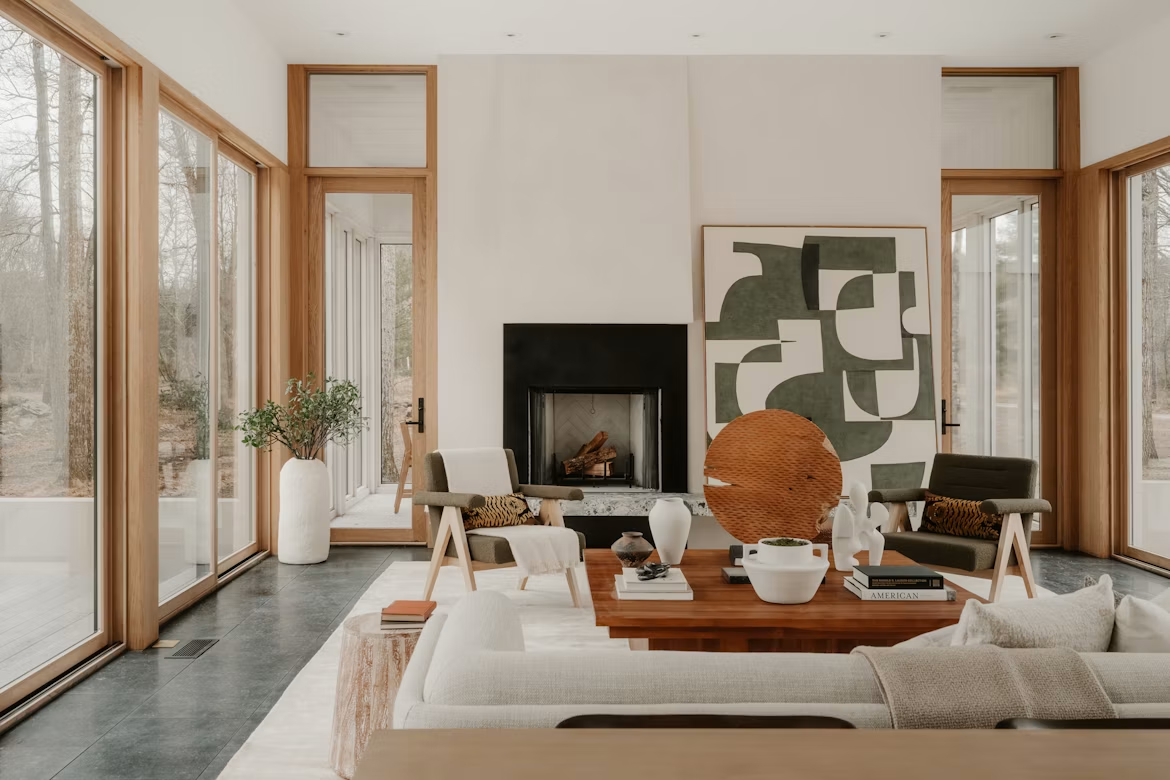
For example, a contemporary interior might combine clean-lined furniture with warm wood, textured fabrics, and carefully selected decorative objects. A traditional room can also incorporate modern lighting or artwork without losing its character.
The goal is not perfect uniformity. Instead, look for relationships between rooms through recurring colors, materials, shapes, or finishes.
Create a Simple Color Direction
Choose a small group of colors before purchasing major furnishings.
A practical approach is to use:
- A dominant color for walls or larger surfaces.
- A secondary color for furniture, curtains, rugs, or larger accessories.
- Accent colors in smaller decorative elements.
This creates a visual hierarchy and makes it easier to decide whether a new item actually belongs in the room.
Use Furniture as the Foundation
Furniture usually occupies more visual and physical space than accessories, so it should be selected carefully.
Think about scale as well as appearance. A large sectional may overwhelm a compact living room, while very small furniture can make a spacious room feel disconnected.
Before buying furniture, measure the available area and check the dimensions of doorways, staircases, lifts, and other access points if delivery is involved.
Mix Function With Personality
Practical furniture does not have to look generic. Look for pieces that provide useful functions while contributing to the overall design.
Examples include:
- Storage ottomans
- Shelving that displays books and objects
- Benches that provide seating and storage
- Extendable dining tables
- Bedside tables with drawers
- Modular seating arrangements
This approach is particularly useful in smaller homes where every piece has to earn its space.
Improve a Room With Lighting
Lighting can change how colors, textures, and furniture appear throughout the day. A room with only one central light source may feel flat even when its furniture and decoration are well chosen.
A layered lighting arrangement can include:
- Ambient lighting for general illumination
- Task lighting for activities such as reading or working
- Accent lighting to highlight artwork, shelving, or architectural details
Table lamps, floor lamps, wall lights, pendant fixtures, and under-cabinet lighting can all contribute to different layers.
Where possible, make use of natural light as well. Keep windows relatively unobstructed if daylight is an important part of the room’s character.
Add Texture Instead of More Clutter
When a room feels plain, adding more accessories is not always the answer. Introducing different textures can create visual interest without filling every available surface.
Consider combinations such as:
- Wood with woven fabrics
- Smooth surfaces with textured upholstery
- Ceramic objects with natural materials
- Soft rugs with harder flooring
- Linen or cotton textiles with structured furniture
Texture becomes especially valuable in rooms that use a restrained color palette.
Make Walls Part of the Design
Walls provide a large opportunity to establish character.
Artwork, mirrors, shelving, wall panels, photographs, and carefully selected decorative objects can make a room feel more complete. The choice should relate to the scale of the wall and the furniture below it.
A common mistake is using artwork that is too small for a large wall. Several smaller pieces can work well as a group, while one larger piece can create a stronger focal point.
Create a Focal Point
Most rooms benefit from having something that naturally attracts attention.
A focal point might be:
- A fireplace
- A large artwork
- A distinctive headboard
- A statement light fixture
- An architectural feature
- A carefully styled shelving unit
- A view through a window
Once the focal point is established, arrange surrounding elements so they support rather than compete with it.
Use Accessories With Intention
Accessories can give a room personality, but too many unrelated objects can make the space feel visually noisy.
Instead of decorating every surface, select objects that have a reason to be there. Books, plants, ceramics, framed photographs, textiles, and personal collections can all contribute when they relate to the room.
Try grouping objects in different heights and shapes rather than lining up many items of identical size.
The best decorative choices often reflect the people who live in the home rather than simply reproducing a showroom appearance.
Think About the Whole Home
Individual rooms matter, but the transition between rooms matters too.
You can create continuity without making every room identical. For instance, similar wood tones, metal finishes, flooring materials, or accent colors can subtly connect different areas.
Open-plan homes require particular attention because several functional zones share one visual environment. Rugs, lighting, furniture orientation, and color can help distinguish areas without physically separating them.
Design for the UK and USA
Home design needs can differ depending on the building, climate, construction style, and available products in different markets.
In the UK, many homes include compact rooms, terraces, semi-detached layouts, older architectural details, or spaces where storage is particularly important. Design decisions may therefore need to account for limited floor area and existing architectural character.
In the USA, housing ranges from compact apartments and townhouses to large suburban and rural properties. Room proportions, open-plan layouts, climate conditions, and construction types can vary substantially between regions.
Rather than copying a design from another property, adapt the underlying idea to the room’s actual dimensions, light, architecture, and daily use.
Common Home Decorating Mistakes
A thoughtful design can be undermined by a few avoidable decisions.
Buying Before Measuring
Furniture that looks appropriate online may be too large once it reaches the room. Measure both the space and the access route before purchasing large pieces.
Following Every Trend
Trends can provide inspiration, but a home filled entirely with short-lived styles may quickly feel dated. Use trends selectively through smaller, replaceable elements.
Ignoring Lighting
A beautiful color can look completely different under warm artificial lighting, cool lighting, or natural daylight. Consider the room’s lighting conditions before committing to a major color scheme.
Overcrowding the Room
More furniture does not necessarily make a room more useful. Leave enough breathing room around important pieces and preserve clear pathways.
Choosing Style Over Comfort
A chair can look excellent in a photograph and still be uncomfortable for everyday use. For frequently used furniture, comfort and practicality should be considered alongside appearance.
A Practical Process for Refreshing a Room
If a room needs improvement but you do not want to redesign everything, work in stages.
Step 1: Remove unnecessary items.
Decluttering makes it easier to understand what the room actually needs.
Step 2: Review the layout.
Move existing furniture before buying anything new. Sometimes the biggest improvement costs nothing.
Step 3: Identify the main problem.
Is the room too dark, crowded, plain, uncomfortable, or lacking storage?
Step 4: Fix function first.
Address seating, storage, lighting, and movement before concentrating on decorative details.
Step 5: Establish a color direction.
Choose complementary colors that work with the room’s permanent features.
Step 6: Add texture and personality.
Introduce rugs, cushions, artwork, plants, books, and other details selectively.
Step 7: Live with the arrangement.
A room can look different after you use it for several days. Notice what feels inconvenient and make small adjustments.
Push Your Design Without Overspending
Refreshing a home does not always require replacing major furniture.
Some changes can have a relatively large visual effect compared with their cost, such as:
- Rearranging existing furniture
- Changing lampshades or light fixtures
- Adding cushions or throws
- Reframing artwork
- Introducing plants
- Reorganizing open shelving
- Repainting a room
- Adding a rug to define a seating area
- Replacing outdated cabinet hardware
The key is to identify what the room is missing before purchasing anything. A targeted change is generally more useful than accumulating decorative items without a clear purpose.
How to Keep a Home Personal
A polished interior should still feel like someone’s home.
Personal photographs, books, artwork, travel objects, handmade pieces, inherited furniture, and collections can provide visual depth and meaning. They also prevent a room from feeling like a generic catalogue arrangement.
You do not need to display everything you own. Rotate collections when appropriate and give particularly meaningful pieces enough space to be appreciated.
Frequently Asked Questions
What does push your design mean in home decor?
In a home-decor context, “push your design” can describe taking an initial decorating idea further while keeping the space practical. It can involve experimenting with color, texture, layout, lighting, or personal details rather than simply copying a finished room.
How can I improve my home design without renovating?
Start with furniture placement, decluttering, lighting, textiles, artwork, and accessories. These changes can alter the appearance and function of a room without changing its structure.
Should every room in a home have the same style?
No. Rooms can have their own personalities. Using a few connecting elements, such as recurring colors, materials, or finishes, can help the home feel cohesive without making every space identical.
How do I choose furniture for a small room?
Measure the room first, prioritize essential functions, and choose pieces that fit the available scale. Furniture with built-in storage or multiple functions can also help when floor space is limited.
How many decorative accessories should I use?
There is no universal number. Use enough to create visual interest without obstructing useful surfaces or making the room difficult to maintain. Grouping a few meaningful objects is often more effective than filling every surface.
Conclusion
Good home design starts with understanding the space rather than simply adding more decoration. Pushyourdesign can be a useful mindset for approaching interiors with greater intention: examine how a room works, improve its layout, establish a coherent visual direction, and then add details that reflect the people who live there.
Whether you are updating a single room or developing a broader home-decor style, practical decisions should come first. Once function, proportion, lighting, and comfort are working together, personal decoration becomes much easier to get right.