Introduction
Lifestyle PushYourDesign can be understood as an approach to everyday living in which your home, routines, and design choices reflect the way you actually want to live. Rather than decorating simply to follow a trend, the idea places greater emphasis on comfort, function, personality, creativity, and thoughtful use of space.
PushYourDesign’s own published material connects its lifestyle and home-design ideas with intentional living, natural elements, practical spaces, and creative decorating. For homeowners and renters in the UK and USA, that concept can be applied without completely renovating a home or buying expensive furniture.
The most useful starting point is simple: design around your daily life first, then make the space visually appealing.
What Does Lifestyle PushYourDesign Mean?
Lifestyle PushYourDesign is not a universally established interior-design term with one formal definition. Online, it is used to describe a design-led approach to lifestyle that connects personal habits, home surroundings, creativity, and intentional choices.
PushYourDesign describes its broader mission around home décor, interior inspiration, creative living, and modern lifestyle ideas. Its published material also emphasizes spaces that combine functionality, comfort, personality, and connections to nature.
For home décor, the concept can be reduced to four practical questions:
- How do you use the room?
- What makes the space comfortable?
- Which colours, materials, and objects represent your taste?
- What can be changed without creating unnecessary clutter or expense?
That makes the approach less about copying a particular interior style and more about creating a home that works for the people living in it.
Start With How You Actually Live
A common decorating mistake is choosing furniture and accessories before thinking about how a room functions.
Instead, observe the room for a few days. Notice where people naturally sit, where clutter collects, whether lighting is adequate, and which furniture rarely gets used.
For example, a living room used mainly for family conversations needs a different arrangement from one used for television, gaming, reading, or working from home.
Design Around Real Activities
Consider:
- Where you relax
- Where you work
- Where children play
- Where guests usually sit
- Where everyday items accumulate
- Which areas need better storage
- Where natural light enters the room
Once these patterns are clear, furniture placement becomes easier. You can then select decorative elements that support the way the room is already being used.
Create a Home That Feels Personal
A polished room can still feel impersonal if everything has been purchased from the same collection or chosen simply because it is fashionable.
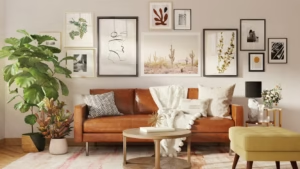
A more personal approach combines different elements that have meaning to you. This might include artwork, books, photographs, handmade objects, travel pieces, plants, vintage furniture, or textiles that reflect your preferences.
The goal is not to display everything you own. Select pieces that contribute to the room without overwhelming it.
Use a Simple Personal-Style Test
Before buying something new, ask:
- Would I still like this if it were not trending?
- Does it work with the way I use this room?
- Do I have somewhere appropriate to put it?
- Does it add function, character, or both?
- Will I still want to see it every day?
These questions can prevent decorative purchases that eventually become clutter.
Use Nature to Make Interiors Feel More Relaxed
Natural design is an important theme in PushYourDesign’s own description of its approach. The site highlights natural materials, greenery, light, and a connection between indoor spaces and the outdoors.
You do not need to redesign an entire room around a nature-inspired theme. Small additions can be enough.
Try:
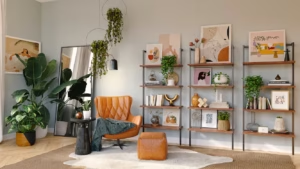
- Wooden furniture or accessories
- Houseplants where lighting allows
- Natural fibres such as cotton, linen, or wool
- Woven baskets
- Stone or ceramic accessories
- Warm, natural-looking finishes
- Curtains that allow useful daylight into the room
The important point is balance. A natural-looking room should still be practical to clean, use, and maintain.
Make Colour Work With Your Lifestyle
Colour affects the character of a room, but there is no single colour palette that works for every home.
If you prefer a calm environment, muted neutrals and restrained contrasts may suit your preferences. If you enjoy energetic spaces, stronger colours can be introduced through artwork, cushions, rugs, painted furniture, or an accent wall.
A useful strategy is to establish three layers:
| Layer | Examples | Purpose |
|---|---|---|
| Base | Walls, flooring, large furniture | Establishes the overall backdrop |
| Supporting | Curtains, rugs, upholstery | Connects major elements |
| Accent | Art, cushions, accessories, plants | Adds personality and contrast |
This makes it easier to experiment without committing every surface to a strong colour.
Prioritize Function Before Decoration
Good interior design should make everyday activities easier, not simply make photographs look attractive.
A beautiful hallway with nowhere to put shoes can quickly become frustrating. A stylish home office with poor lighting may look good but remain uncomfortable to use. A living room filled with furniture may have plenty of decoration but little usable space.
Before adding another decorative item, consider whether the room has enough:
- Storage
- Comfortable seating
- Useful lighting
- Clear walking paths
- Practical surfaces
- Space for everyday belongings
This is where lifestyle and interior design overlap most clearly: the best decorative decision is often one that solves a practical problem.
Refresh a Room Without a Major Renovation
You do not need a full remodel to make a room feel different.
Start with changes that are relatively easy to reverse:
Rearrange the Furniture
Changing the position of a sofa, chair, table, or bed can alter how the entire room feels.
Improve the Lighting
Use a combination of general, task, and accent lighting where appropriate. A reading corner, for example, may benefit more from a dedicated lamp than from simply increasing the brightness of the whole room.
Reduce Visual Clutter
Remove items that have no practical or emotional value. Empty space can make the things you choose to keep more noticeable.
Change Soft Furnishings
Cushions, throws, curtains, rugs, and bedding can introduce a different colour or texture without replacing major furniture.
Add One Meaningful Focal Point
Instead of filling every wall and surface, choose one strong feature such as artwork, a mirror, a distinctive piece of furniture, or a collection of plants.
Apply the Same Thinking to Different Rooms
The lifestyle approach can work throughout a home, but each room has different requirements.
Living Room
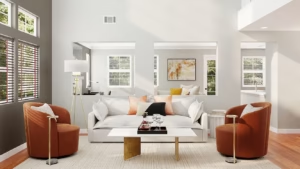
Prioritize conversation, relaxation, lighting, and flexible seating.
Bedroom
Keep the environment comfortable and relatively uncluttered. Storage should make it easy to put everyday items away.
Kitchen
Combine attractive materials and accessories with efficient storage and clear preparation areas.
Home Office
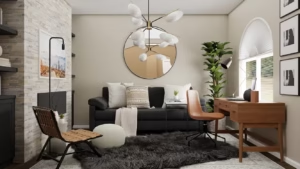
Focus on appropriate lighting, comfortable positioning, accessible storage, and enough space to work without unnecessary distractions.
Entryway
Give frequently used items a designated place. Hooks, baskets, benches, or a small storage unit can prevent everyday clutter from spreading into other rooms.
Make Sustainable Choices Without Chasing Perfection
A lifestyle-led approach can also encourage more thoughtful consumption.
Instead of replacing furniture whenever a new trend appears, consider whether an existing item can be repaired, rearranged, refinished, reupholstered, or combined with newer pieces.
Before buying something, consider its expected usefulness and whether it genuinely fills a gap.
This can be particularly helpful when decorating on a budget. A room does not become more personal simply because more objects are added.
A Practical PushYourDesign Room Checklist
Before considering a room finished, ask:
- Does the furniture arrangement support the room’s main purpose?
- Can people move around comfortably?
- Is there enough useful storage?
- Does the lighting suit different activities?
- Are colours and textures working together?
- Are there objects that have personal meaning?
- Is anything present simply because it is trendy?
- Can the room be maintained without excessive effort?
If several answers reveal a problem, solve the functional issue before buying more decoration.
Common Mistakes to Avoid
Copying a Complete Room From Social Media
An attractive room photographed for someone else’s lifestyle may not suit your family, property, climate, budget, or daily routine.
Buying Everything at Once
Decorating gradually gives you time to understand what the room actually needs.
Prioritizing Appearance Over Comfort
A chair, sofa, desk, or bed should be comfortable enough for its intended purpose.
Creating Too Much Visual Clutter
Personal style does not require every favourite object to be displayed simultaneously.
Following Trends Too Literally
Trends can provide inspiration, but your home does not need to change every time design preferences shift.
How to Begin Your Own Lifestyle PushYourDesign Approach
Start with one room rather than attempting to redesign your entire home.
Spend a few minutes identifying what works and what does not. Remove obvious clutter, reconsider the furniture arrangement, improve one lighting problem, and introduce one or two elements that better reflect your personality.
Then live with those changes before making another purchase.
This gradual process is consistent with the broader PushYourDesign emphasis on practical, personalized spaces rather than treating design as decoration alone.
Conclusion
Lifestyle PushYourDesign is most useful when treated as a way of thinking about home and everyday life, rather than as a rigid decorating style. The central idea is to make intentional choices that connect appearance with comfort, function, personality, and the way a space is genuinely used.
You can begin with something as simple as rearranging furniture, reducing clutter, improving lighting, bringing in natural elements, or displaying objects that have personal meaning. The result does not need to look like a showroom. It should feel like a home designed around the people who live there.